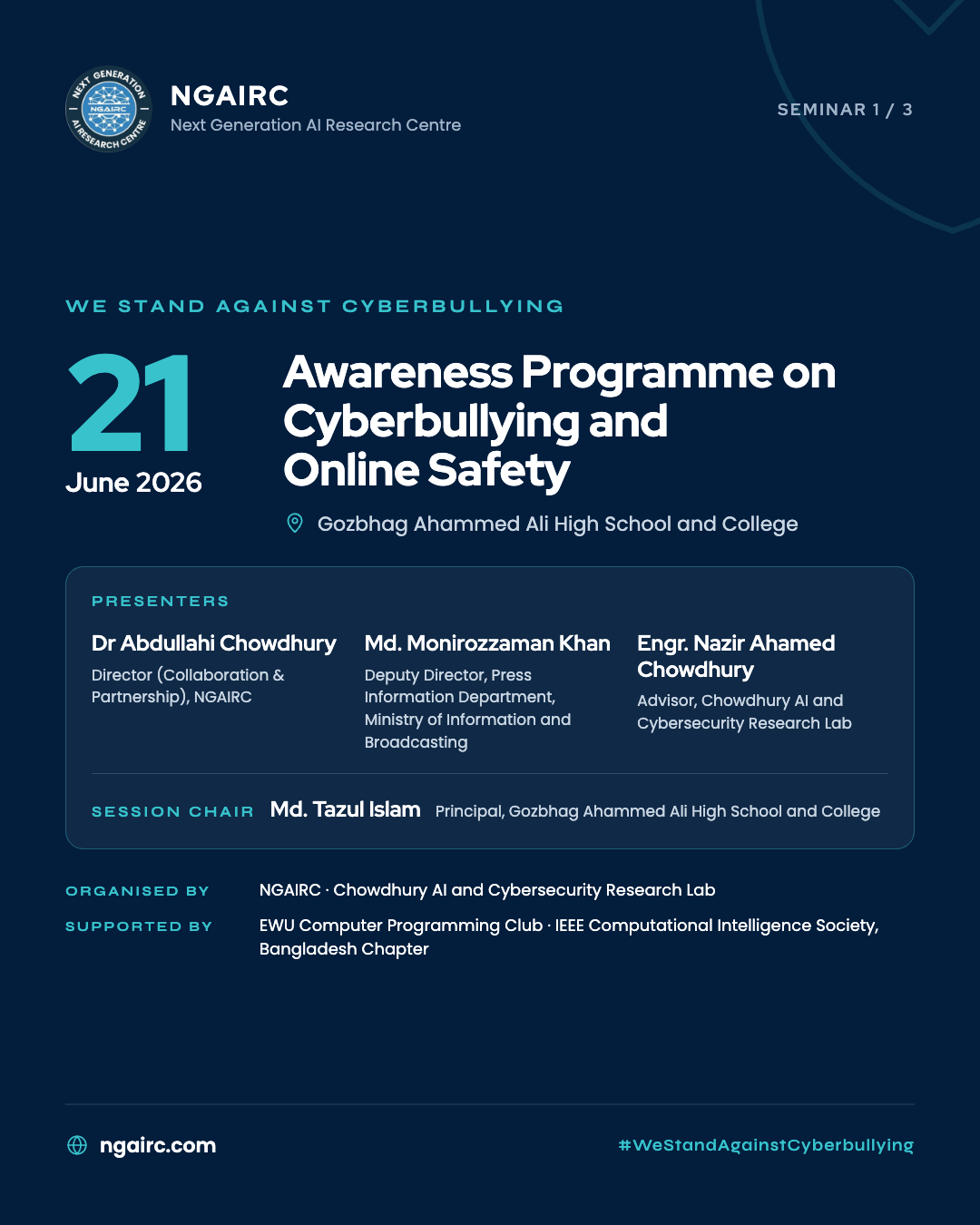
View full flyer ↗
School seminars, digital-safety campaigns and research projects run under NGAIRC's initiative against cyberbullying.
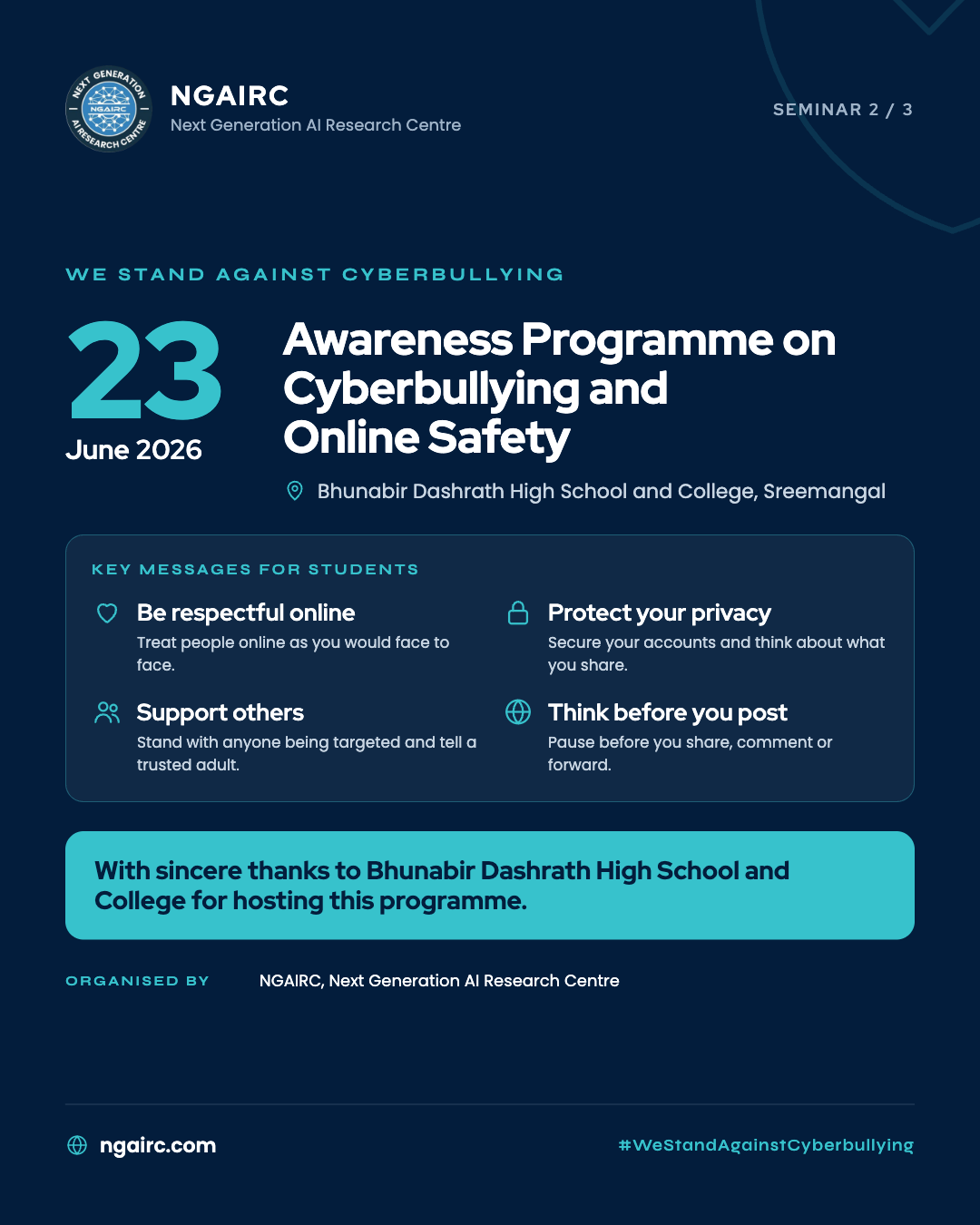
Free awareness seminars that help students recognise, resist and report cyberbullying, including AI-enabled harms such as deepfakes. Each session combines an awareness talk, practical digital-safety guidance, an anonymous student survey and an interactive question-and-answer session, and every participant receives a certificate of attendance.
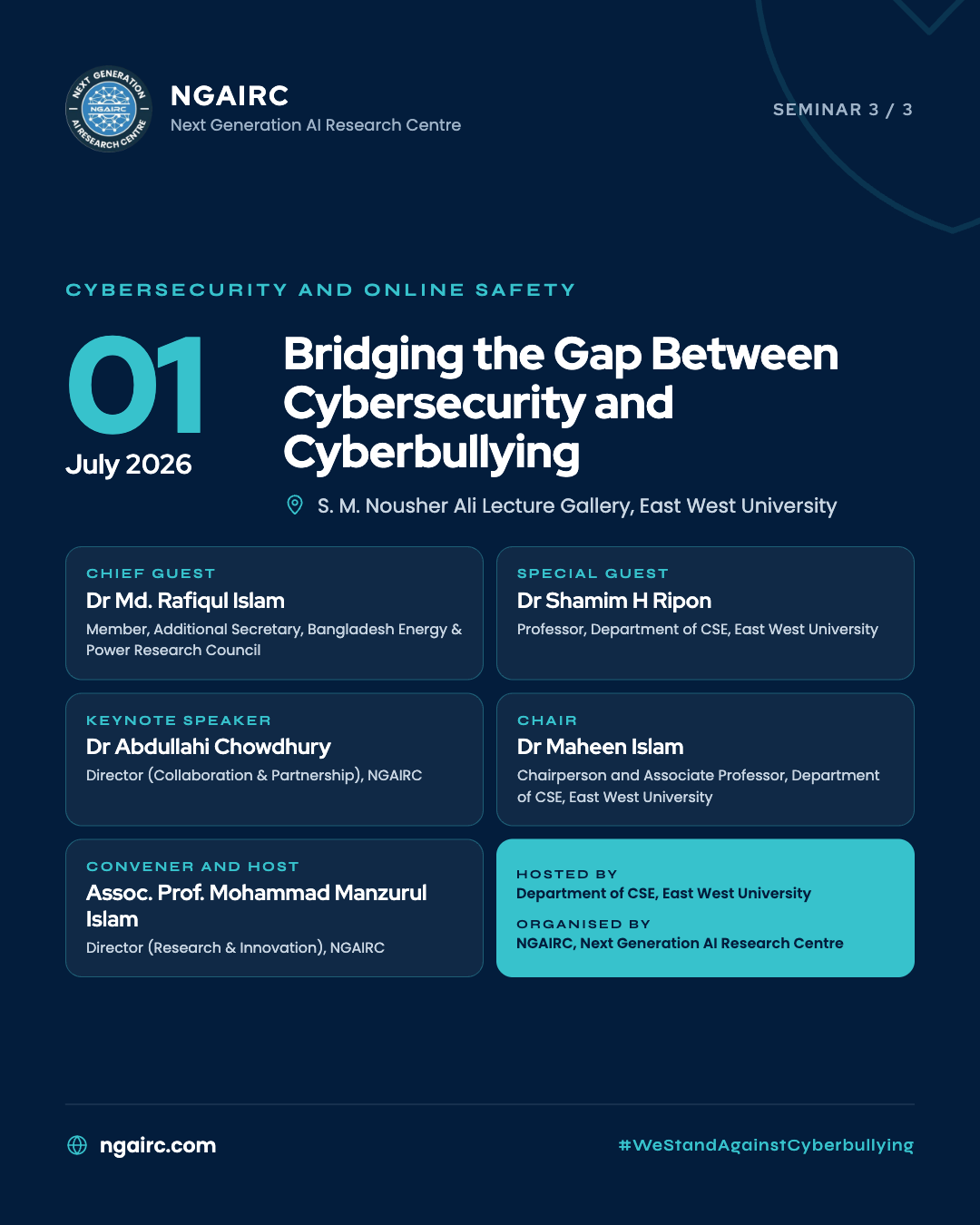
The project is delivered in partnership with schools, colleges and universities, and with professional and student organisations that share our commitment to keeping young people safe online.
What every seminar covers
Recognise every form of cyberbullying, including deepfakes and sextortion.
Use reporting tools, privacy settings and two-factor authentication.
Keep evidence, block and restrict, and secure your accounts.
Stand up for peers and know when to seek help from an adult.
Programme details for each seminar delivered under the We Stand Against Cyberbullying project. Select a flyer to view it in full.
View full flyer ↗
View full flyer ↗
Treat people online as you would face to face.
Secure your accounts and think about what you share.
Stand with anyone being targeted and tell a trusted adult.
Pause before you share, comment or forward.
View full flyer ↗
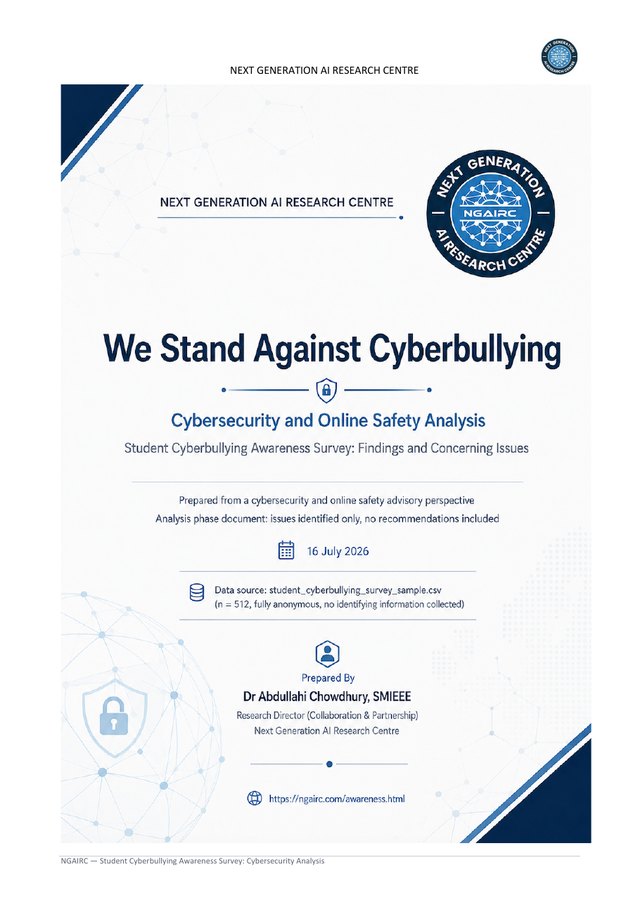
A cybersecurity and online safety analysis of the anonymous awareness survey completed by students as part of the We Stand Against Cyberbullying initiative.
The survey covered internet use and account security, understanding of cyberbullying and harassment, experience and observation of online harm, awareness of rights and support pathways, and personal responsibility online. The report is an analysis-phase document: it identifies and documents concerning issues only, and the next step is for NGAIRC advisors to interpret the findings and determine an appropriate programme update. Prepared by Dr Abdullahi Chowdhury.
Eight of the indicators highlighted in the report, as a percentage of the 512 respondents.
Source: NGAIRC, Student Cyberbullying Awareness Survey (n = 512). Findings are self-reported and reflect stated perceptions, knowledge and recalled behaviour; see the methodology note in the report.
Seminars are free of charge, adapted to Years 8–12 and college audiences, and run for 60 to 90 minutes with certificates for every participant.